

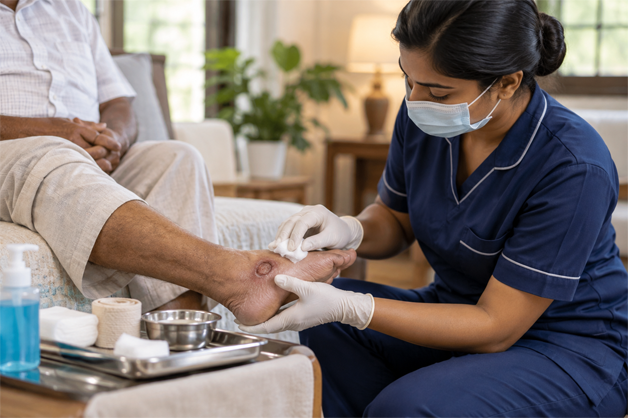
This is why diabetic wound care at home should not be treated as ordinary first aid. Even a wound that looks small should be observed carefully, especially if it is not healing as expected.
• Washing hands before touching the wound
• Gently cleaning the area as advised by a healthcare professional
• Keeping the wound protected with the recommended dressing
• Avoiding unnecessary pressure or friction on the affected area
• Checking the wound regularly for changes
• Following any prescribed medicines or treatment plan• Washing hands before touching the wound
• Gently cleaning the area as advised by a healthcare professional
• Keeping the wound protected with the recommended dressing
• Avoiding unnecessary pressure or friction on the affected area
• Checking the wound regularly for changes
• Following any prescribed medicines or treatment plan
A diabetic wound dressing should be selected and changed according to the wound’s condition and the advice of a healthcare professional. Different wounds may require different types of dressings. The dressing may also need to be changed at a specific frequency depending on factors such as wound size, drainage and infection risk.
• Increasing redness or swelling
• Warmth around the wound
• Pus or other unusual discharge
• Foul smell
• Increasing pain or tenderness
• Skin becoming darker or changing colour
• Fever or chills
• The wound becoming larger or deeper
• No noticeable improvement over time
• Is deep or extensive
• Is not healing
• Shows signs of infection
• Keeps reopening
• Has significant discharge
• Is associated with swelling or colour changes
• Is located on a high-pressure area of the foot
• Occurs in a patient with reduced sensation or significant mobility problems
Simple diabetic foot care habits can include checking the feet regularly, keeping the skin clean and moisturised without applying moisturiser between the toes, wearing appropriate footwear and avoiding walking barefoot.
Some minor wounds may be managed at home with appropriate medical guidance. However, wounds that are deep, infected, worsening or not healing should be assessed by a healthcare professional.
There is no single schedule for every wound. The frequency depends on the type of wound, dressing used and the care plan recommended by the healthcare professional.
Diabetes can affect nerves and blood circulation, which may reduce sensation and interfere with the healing process in some patients.
It is better to avoid applying unprescribed home remedies, creams or other substances to an open wound. Follow the treatment and dressing instructions provided by a healthcare professional.
Seek medical advice if the wound is deep, worsening, not healing, showing signs of infection or accompanied by symptoms such as fever, increasing swelling, discharge or changes in skin colour.

Inhouse Medicare is the most trusted and leading provider of home healthcare services to people of all ages in Coimbatore. We provide timely, high-quality medical care as well as diagnostic services right at your front door.
Doctor Consultation | Skilled Nursing Facilities | Nursing services | Trained Attendant Services | Elder Care Services | Palliative Care Services | End of Life Care | Hospice Care | Stroke Rehabilitation Care | Physiotherapy Services | Laboratory Services | Pharmacy Services | New Born Care | Elder Assistant Services | Geriatric Care Services | Rental Services
Inhouse Medicare
123, Kalidas Road, Ram Nagar, Coimbatore, Tamil Nadu, India, 641009.
© 2026 All Rights Reserved.
Powered by