
In house

Diabetic Wound Care at Home: What Families Should Know

A small cut may not seem like a big deal. But when a person has diabetes, even a minor wound can sometimes take longer to heal and may need closer attention. This is particularly important when the wound is on the foot. Reduced sensation can make it difficult for a person to notice an injury, while poor circulation can affect healing.
So, what should families do when a person with diabetes has a wound at home? The first step is not to panic or start trying random home remedies. It is to understand the wound, follow the care plan given by the healthcare professional and know the signs that require medical attention.

Why Do Diabetic Wounds Need Special Attention?

Diabetes can affect the nerves and blood vessels, particularly over time. Reduced sensation may mean that a person does not immediately feel a cut, blister or pressure injury.
At the same time, reduced blood flow can make it harder for some wounds to heal properly.

This is why diabetic wound care at home should not be treated as ordinary first aid. Even a wound that looks small should be observed carefully, especially if it is not healing as expected.

What Should Families Do When a Diabetic Wound Occurs?

The right approach depends on the type and severity of the wound. For a minor wound, basic care may include:

• Washing hands before touching the wound
• Gently cleaning the area as advised by a healthcare professional
• Keeping the wound protected with the recommended dressing
• Avoiding unnecessary pressure or friction on the affected area
• Checking the wound regularly for changes
• Following any prescribed medicines or treatment plan• Washing hands before touching the wound
• Gently cleaning the area as advised by a healthcare professional
• Keeping the wound protected with the recommended dressing
• Avoiding unnecessary pressure or friction on the affected area
• Checking the wound regularly for changes
• Following any prescribed medicines or treatment plan

Do not assume that a wound is healing simply because it is no longer painful. Reduced sensation can sometimes mask discomfort.

How Should a Diabetic Wound Be Dressed?

A diabetic wound dressing should be selected and changed according to the wound’s condition and the advice of a healthcare professional. Different wounds may require different types of dressings. The dressing may also need to be changed at a specific frequency depending on factors such as wound size, drainage and infection risk.

Families should avoid repeatedly removing and replacing a dressing simply to check the wound unless they have been instructed to do so. If a nurse has provided specific dressing instructions, follow those instructions carefully.

What Is Diabetic Foot Wound Care?

The feet deserve particular attention because wounds can sometimes go unnoticed. Diabetic foot wound care involves more than putting a bandage over a cut. The wound needs to be assessed, protected and monitored for signs of infection or delayed healing.
The patient may also need to reduce pressure on the affected area. Depending on the wound, a doctor may recommend specific footwear, offloading methods or other measures.
Do not cut away calluses or dead tissue yourself. These may require assessment and treatment by a trained professional.

What Signs Should Families Watch For?

A wound needs prompt medical attention if there are signs that it may be infected or failing to heal. Watch for:

• Increasing redness or swelling
• Warmth around the wound
• Pus or other unusual discharge
• Foul smell
• Increasing pain or tenderness
• Skin becoming darker or changing colour
• Fever or chills
• The wound becoming larger or deeper
• No noticeable improvement over time

For a person with diabetes, it is better to have a concerning wound assessed early rather than wait for it to become more serious.

What Should Families Avoid?

When caring for a diabetic wound, good intentions can sometimes lead to problems. Avoid applying unprescribed creams, powders or home remedies to an open wound. Do not use harsh substances to clean the wound unless specifically recommended by a healthcare professional.
It is also important not to cut, scrape or peel tissue around the wound yourself. Most importantly, do not delay medical assessment because the wound initially appears small.

When Is Professional Wound Care Needed?

Some wounds can be managed with guidance and regular monitoring. Others require professional assessment and ongoing care. A patient may need professional support if the wound:

• Is deep or extensive
• Is not healing
• Shows signs of infection
• Keeps reopening
• Has significant discharge
• Is associated with swelling or colour changes
• Is located on a high-pressure area of the foot
• Occurs in a patient with reduced sensation or significant mobility problems

In these situations, diabetic wound treatment at home should be carried out according to a proper medical care plan rather than through trial and error.

Why Professional Nursing Support Can Help

Wound care can become difficult for families when the patient is elderly, has limited mobility or needs regular dressing changes
A trained nurse can help with wound care as prescribed, maintain appropriate hygiene during dressing changes and observe the wound for changes that may need medical attention.
This can also make things easier for families who may not feel confident handling an open wound themselves.

Diabetic Foot Care Goes Beyond the Wound

Once a wound develops, treatment is important. But preventing another wound is just as important.

Simple diabetic foot care habits can include checking the feet regularly, keeping the skin clean and moisturised without applying moisturiser between the toes, wearing appropriate footwear and avoiding walking barefoot.

Patients should also have their feet examined regularly as recommended by their healthcare professional, particularly if they have reduced sensation or previous foot problems.

Choosing Diabetic Wound Care in Coimbatore

When a diabetic wound needs regular dressing or monitoring, travelling to a clinic every time may not always be comfortable for the patient, especially when mobility is already limited.
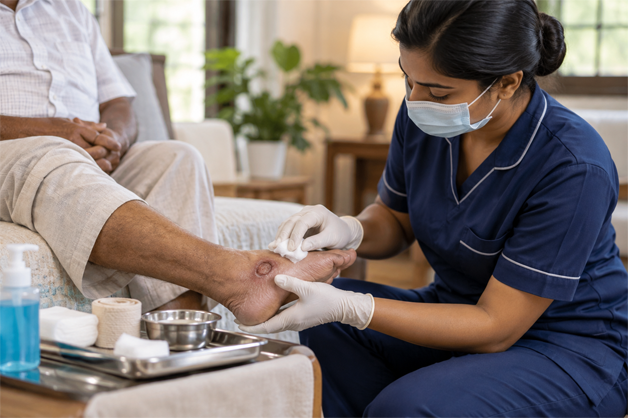
At Inhouse Medicare, our diabetic wound care in Coimbatore brings professional wound care support to the patient’s home. Our nursing team can assist with prescribed dressing care and help families manage the patient’s ongoing wound care needs in a familiar environment.
Because with diabetic wounds, timely and appropriate care matters. And sometimes, having the right professional support at home can make that care easier to manage.

Frequently Asked Questions

Some minor wounds may be managed at home with appropriate medical guidance. However, wounds that are deep, infected, worsening or not healing should be assessed by a healthcare professional.

There is no single schedule for every wound. The frequency depends on the type of wound, dressing used and the care plan recommended by the healthcare professional.

Diabetes can affect nerves and blood circulation, which may reduce sensation and interfere with the healing process in some patients.

It is better to avoid applying unprescribed home remedies, creams or other substances to an open wound. Follow the treatment and dressing instructions provided by a healthcare professional.

Seek medical advice if the wound is deep, worsening, not healing, showing signs of infection or accompanied by symptoms such as fever, increasing swelling, discharge or changes in skin colour.